Timestamping vs Electronic Signature: Practical Differences (and When to Combine Them)
Timestamping and electronic signature do not prove the same thing. Here is what each proves, practical scenarios, and why the signature + timestamp combo is often best.
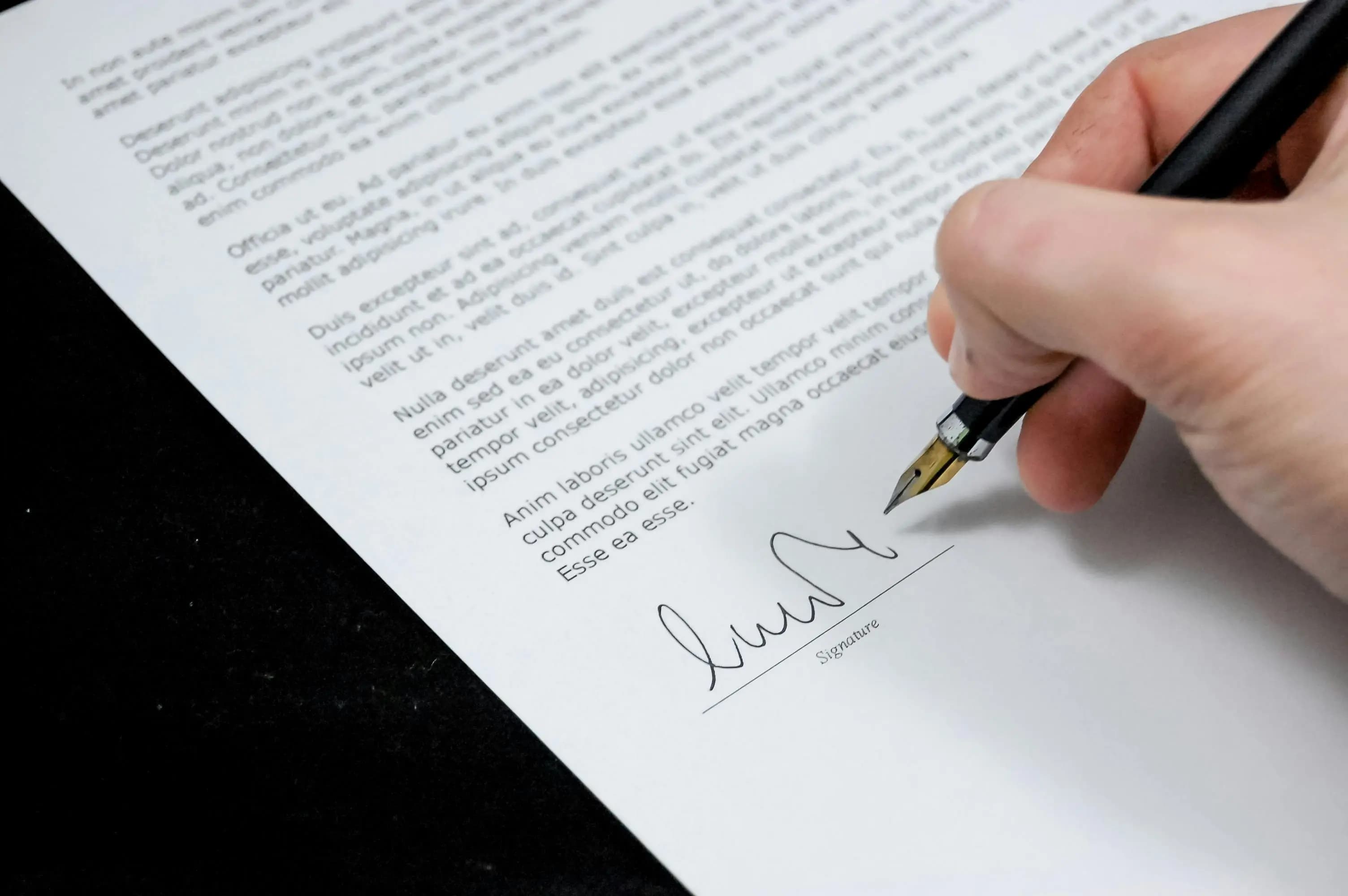
Timestamping and electronic signatures appear together in many workflows (contract execution, HR validation, compliance), which is why they get conflated. But they answer different questions.
- Electronic signature mainly proves who agreed, and to what content. (European Commission)
- Timestamping mainly proves when content existed, with an integrity link. (EUR-Lex)
This guide covers practical differences, real scenarios, and when signature + timestamping makes sense together.
Plain-English definitions
An electronic signature proves a person's intention to approve or accept a document. (European Commission)
An electronic timestamp proves that a file (or data) existed at a given date/time. (EUR-Lex)
Electronic signature in one line
An electronic signature is electronic data attached to or logically associated with other data, used by a signatory to sign. (EUR-Lex)
Depending on level (simple, advanced, qualified), assurance and evidentiary strength differ. eIDAS explicitly states that a qualified electronic signature has legal effect equivalent to handwritten signature. (EUR-Lex)
Timestamping in one line
Electronic timestamping links data to a specific time in order to establish that the data existed at that time. (EUR-Lex)
Under eIDAS, a qualified electronic timestamp benefits from a presumption regarding date/time accuracy and integrity of the linked data.
Ask this first: do you need to prove who agreed (signature), when the content existed (timestamping), or both?
What proves what? (practical comparison)
| Need | Electronic signature | Timestamping |
|---|---|---|
| Prove a person's intention ("I agree") | Yes, this is its core function (European Commission) | No |
| Prove existence of content at a date/time | Sometimes (if timestamp/audit logs are included) | Yes (EUR-Lex) |
| Detect post-signing/post-issuance modification (integrity) | Yes, depending on level/format (EUR-Lex) | Yes (date/time linked to data) |
| Benefit from eIDAS presumption on date/time | No, not its main purpose | Yes, if qualified timestamp |
| Handwritten-equivalent legal effect | Yes, for qualified electronic signature (QES) (EUR-Lex) | No |
A visible date in a PDF/Word file, an email sent date, or a screenshot is not the same as cryptographic timestamping. Metadata is easier to challenge or alter.
How it works
Shared technical base: hash and integrity
Both signature and timestamping commonly rely on cryptographic fingerprints (hashes):
- the hash identifies one exact file version,
- any file change changes the hash,
- this supports integrity verification.
Example (SHA-256):
shasum -a 256 my-contract.pdf
Signature: prove "who" + "what"
Electronic signature is about signatory intent. (European Commission)
For advanced signatures, eIDAS requires elements such as unique link to signatory, identification capability, signatory control, and modification detection. For qualified signatures, eIDAS grants handwritten-equivalent legal effect. (EUR-Lex)
Timestamping: prove "when" + integrity at time T
eIDAS defines timestamping as linking data to a specific time. (EUR-Lex)
In practice, you typically see:
- PKI/TSA-based timestamping (for example RFC 3161 flows), (IETF)
- blockchain-anchored timestamping (for example OpenTimestamps on Bitcoin) with independent verification. (OpenTimestamps)
Recommended workflow: signature + timestamping
- 1Freeze the documentGenerate the file hash and preserve the exact final version.
- 2Sign (if commitment matters)Collect electronic signatures from the relevant parties at the assurance level your context requires.
- 3TimestampAdd timestamping; if strong date/time presumption matters, use qualified timestamping.
- 4Archive evidenceKeep document, audit trail, certificates, timestamp tokens, and verification method together.
- 5Be verification-readyBe able to recompute hash and verify both signature and timestamp on demand.
Signature locks the who and the what. Timestamping locks the when. Together, they remove much of the ambiguity in disputed situations.
Real-world scenarios: timestamp, signature, or both?
1) Sending a quote or proposal
- Goal: prove version and date of existence.
- Choice: timestamping is often enough; add signature if you want formal acceptance.
2) Service agreement, NDA, B2B terms
- Goal: prove agreement of parties and exact version.
- Choice: signature + timestamping for stronger evidence. (Signaturit)
3) HR records: acknowledgments, policies, amendments
- Goal: proof of acceptance + timeline traceability.
- Choice: signature first, timestamping as timeline reinforcement.
4) IP before disclosure: logo, design, text
- Goal: prove priority before sharing externally.
- Choice: timestamping + disciplined version retention. (ANSSI)
5) Dispute about later modifications
- Goal: prove integrity and existence time.
- Choice: timestamping (qualified when stakes are high), plus signature if commitment is disputed.
What each one proves, and does not prove
What timestamping proves well
- Existence of content (or its hash) at a specific date/time. (EUR-Lex)
- Integrity of the date/time-to-data link.
What timestamping does not prove alone
- Identity of the author/signatory.
- Contractual consent.
What electronic signature proves well
- Intent to agree to a document.
- Depending on level: stronger identity/integrity assurances.
- Qualified signature: handwritten-equivalent legal effect under eIDAS. (EUR-Lex)
What signature alone may not fully prove
- A reliable chronology without explicit timestamping: exact sequence, prior existence relative to later events, and timing are all easier to dispute without a dedicated time layer.
Best-practice checklist
- Preserve the final version (ideally a fixed PDF) plus key intermediate versions.
- Generate and archive hashes for critical versions.
- For signatures: preserve full evidence pack (audit trail, identity checks, process details).
- For timestamping: preserve token/proof and reproducible verification method.
- For high-stakes matters: prefer qualified providers verifiable via EU trusted lists (QTSP). (European Commission)
- Regularly test your ability to re-verify (rehash, signature check, timestamp check).
A signed or timestamped file without a usable evidence pack (logs, tokens, verification method) loses much of its practical value.
FAQ
Conclusion
Timestamping and electronic signature are not competing tools. Signature covers who agreed and to what. Timestamping covers when it existed and whether it changed. For anything with real stakes, you want both.
The workflow: hash → signature (when needed) → timestamp → archive → verify.
Disclaimer: This article is for informational and educational purposes only and is not legal advice. The right signature/timestamping level depends on context, risk, and applicable requirements.